Printer-Friendly | Back
The placid waters held a huge school of jack mackerel that parted as my buddy swam forward. Kim's favorite underwater scene is a big school of fish that will surround her, pulse with her movements and spin around her in a dizzying display of silver and blue. I don't think I have ever dived Indian Rock when there was not a large school of fishanchovies, sardines, blacksmith or mackerel. It is one of the nearly guaranteed delights of this excellent beginner dive site.
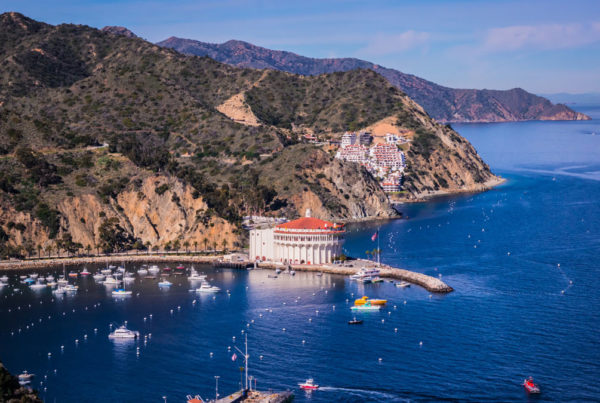
Indian Rock lies in the protected waters of Emerald Bay, a large cove on the west end of Catalina Island. Conditions are nearly always good, and weather is only occasionally a factor in diving here. Water clarity is quite good and strong currents rare.
Indian Rock is a bare rock the size of small house with reefs extending outward in all directions. In addition, there are extensive reef systems to the west and east of the rock. The rock gains its name from the profile that, at just the right angle, shows the face appearing to be that of a noble native American.

The reef that extends off the north side of the rock (away from the island) is my favorite. The reefs drop off in shelves in a moderately steep tumble to about 65 feet where the rocks meet the sand. Across the sand look for bat rays lounging on the flats.
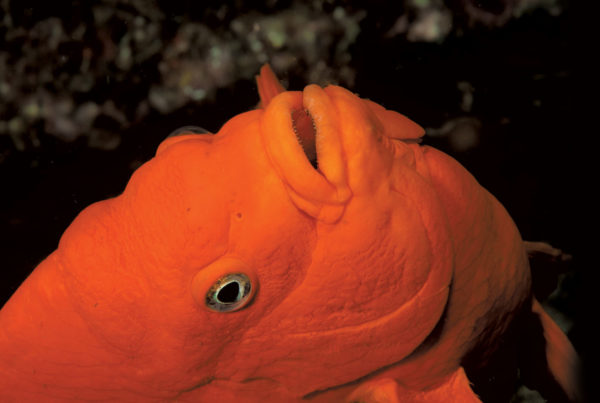
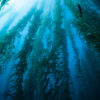
Back up in the forest, you are likely to encounter schools of blacksmith in the towering kelp. Harbor seals will frequently visit. Light angles are excellent with abundant fish, clear water and healthy kelp, making for excellent wide-angle photography. Wonderful stands of golden gorgonian and colorful fish like garibaldi, rock wrasse, sheephead, and señoritas also add to the mix to make for good wide-angle photos. I especially like to move up into the calm shallows to photograph the sunbeams streaming through the kelp canopy.
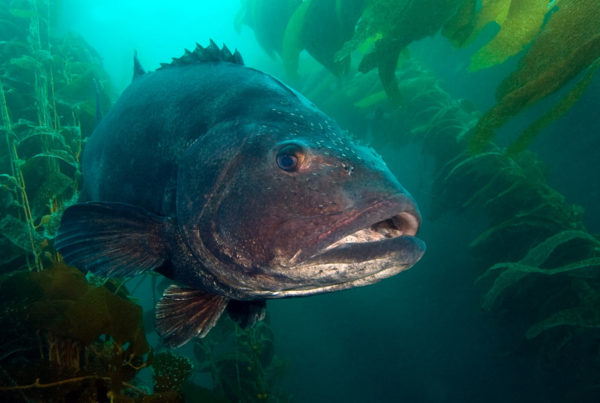
Small and medium-size animals are not lacking either. Emerald Bay falls in an invertebrate preserve. Only fin fish may be taken. As such, lobster are abundant, large and sassy. This is a good place to photograph the normally shy crustaceans. For macro photo work, I like to move in close to the rocks that seem almost overpopulated with brightly colored tiny blue-banded gobies. Other reef inhabitants include chestnut cowries, a variety of stars, and even an occasional abalone, now perhaps beginning to make a comeback.
About the only unusual hazard to diving here is the boat traffic. Inshore from Indian Rock is a popular mooring area with a yacht club onshore. Also onshore inside the cove, at Johnson's Landing, is a Boy Scout camp. Just stay to the seaward side of the rock and reefs to avoid the boat traffic.
As previously mentioned, there are also extensive reef systems to the west (marked on the surface by a wash rock) and to the east. One could easily spend an entire day of diving here and never cover the same area twice.
Dive Spot At a Glance
Location: Western portion of frontside of Catalina Island. Well marked on most charts.
Access: Boat only. Frequently visited by charter boats from Avalon and mainland.
Skill level: All.
Depths: 0-70 feet.
Visibility: Very good, averaging 40-50 feet, higher not unusual.
Snorkeling: Very good.
Photography: Excellent wide angle in kelp forest with good light angles. Lots of good macro subjects.
Hunting: Invertebrate preserve. No lobster can be taken. Fair to poor spearfishing for calico bass, halibut, and yellowtail.
Suggested Dive Charter Boats Frequently Serving This Area:
Great Escape - (866) 348-3262
Mr. C - (310) 521-9737
Scuba Cat - (800) 353-0330
Island Time - (866) 488-3483
or see the California Scuba Calendar section for trips to Catalina Island.
Dale Sheckler is editor of California Diving News and is the co-author of the book Southern California's Best Beach Dives.
© Copyright 2006, all rights reserve, by Saint Brendan Corporation, P.O. Box 11231, Torrance CA 90510, mail@cadivingnews.com. No part of this may be reproduced, stored in a retrieval system/website, or transmitted in any form by any means without prior written permission of the publisher.
IMPORTANT NOTICE:
The contents of this publication/website are opinions of the individual writers. The publishers of California Diving News and its contributors assume no responsibility for any mishap claimed to be a result of use of this material. Diving is an adventure sport and with it comes inherent risks. Improper use of diving equipment or improper diving techniques may result in serious injury or, in extreme circumstances, death. Readers are admonished to use their own best judgement in each individual situation. |
|
|