| The sea experiences seasonal changes just as we observe on land. It's not just about seasonal variations in temperature and water quality, it's also about the waxing and waning of the critters we see. Perhaps the biggest change in winter is the loss of the thick, summer beds of giant kelp, but there are many more subtle changes that occur to our near shore marine animals. Carmel River Beach is a great place to observe our seasonal, winter marine life.
Carmel River Beach is located in Carmel at the intersection of Ocean View Avenue and Scenic Road. Divers should take the wooden staircase to the beach. From the top of the stairs you get a good view of Carmel Bay with Point Lobos to the right and Monastery Beach to the left. It's a short walk across the sand beach, and you should enter in the protected area just to the left of the rocky projection.
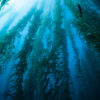
I suggest you swim out around the rocky projection to the right before submerging. Here you will find a rocky bottom in 20 to 30 feet of water. In summer and fall a thick kelp bed is always found here, but in winter the kelp is very thin or may not be there at all. This makes for a very easy surface swim to and from the entry. Large boulders are strewn about the bottom. On the boulders is a healthy covering of coralline algae with numerous nudibranchs and small fish. This area can be so interesting that you may not want to swim any further, particularly if you are fascinated with wee little critters. This area can be rough, but on calm days it is a very nice place for macro photography.
On the outside of the kelp bed the bottom drops off to 40-50 feet where you will find pinnacles that jut to-and-fro from the sand bottom. Many of these pinnacles are steep-sided and create an assortment of mini-walls that will delight most divers. This is one of the few places in the Monterey area where beach divers can easily get to good vertical walls. There is a great variety on invertebrate life here. The sponges, tunicates and anemones are found year around, but the nudibranchs you see will change from season to season.
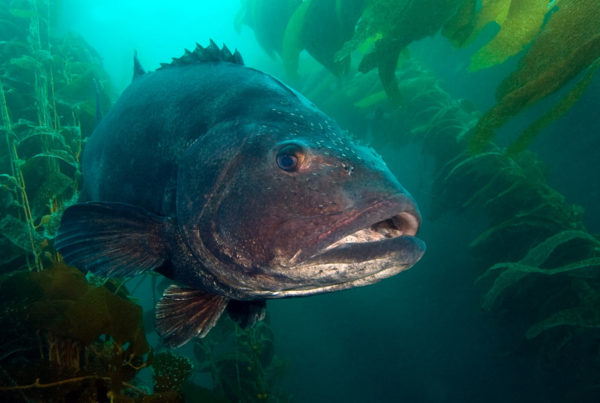
In winter large female lingcod migrate from deep water to nest in the shallows. The female will lay a mass of eggs in a small cave or nook. After the male fertilizes her eggs, she quickly returns to deep water, leaving the male to guard the nest. The male will fastidiously guard one, two, or some times three nests from different partners. Should the male be removed from the nest, scavenging animals will quickly consume the egg mass. This is why responsible spearfishers will never shoot a nest-sitting lingcod. This is a great opportunity for photographers and fish watchers to get close to large females and even closer to nest-sitting males.
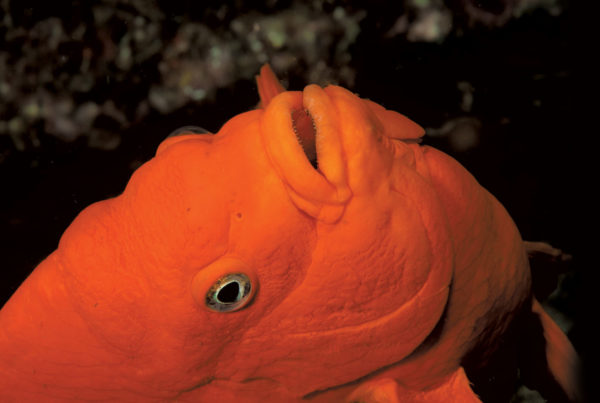
Cabezons are another winter breeder, and cabezon nests are frequently found in shallow depressions or on exposed rocky surfaces. Like lingcod, the cabezon male will guard the nest, but unlike lingcod, the cabezon eggs are so toxic that most scavengers avoid them.
More lingcod and a better variety of rockfish may be found along the reef as it bends towards Carmel Beach. Look for harbor seals hunting among the rocky canyons. A diver's kayak is an ideal vehicle to reach this remote reef as it is a short paddle, and it is easy to carry the light kayaks up and down the steps.
Offshore, gray whales make their annual migration from Alaska to Baja and back. While they normally are further offshore that Carmel River Beach, they sometimes take a rest break right off the point. Super pods of Rizzos dolphins numbering in the many hundreds are predictably found in Carmel Bay in winter. These are very shy and normally do not interact with divers, but they do make good companions while motoring or paddling to your favorite dive site.
Carmel River Beach is a great place to observe the best of our winter fish life. The entry is very protected from a northwest swell, and this a great spot for an after-dive picnic since the bluffs protect the beach from the afternoon wind.
Location: In Carmel at the intersection of Scenic Road and Ocean View Avenue.
Access: Limited parking along Ocean View Avenue, and no parking is available on Scenic Road. Don't let that discourage you from diving there, just show up a little early. There is a long wooden staircase to the beach, but no facilities. Kayaks and very small inflatable boats may be launched here.
Depth: 20-50 feet
Visibility: Generally good, 20-40 feet
Skill level: Intermediate or better.
Photography: Good wide-angle and macro on rock walls.
Hunting: Carmel River Beach is located within the limits of the Carmel Bay State Marine Conservation Area. No invertebrates may be taken; spearfishing is permitted.
Hazards: Watch for surge and surf. Look for very thick kelp in summer and fall. You should avoid entering in the center of the beach due to the greater wave action. If you are new to California beach diving, you may want to bring a friend along who has dived this site. |