South Coast    |    Channel Islands    |    Central Coast    |    North Coast    |    Travel
Calendar of Trips    |    Directory    |    Dive Boat Reviews
Directory    |    Sport Chalet    |    Scuba.com    |    Pacific Wilderness    |    Beach Cities Scuba    |    Eco Dive Center    |    CDS    |    Sea Stallion
Still    |    Video
New Gear    |    New Books & DVDs    |    Reviews    |    Guides    
Clubs    |    Opinions: Editorials    |    Opinions: Letters    |    News Briefs    |    Events    |    Specials   


Below is the active list of scheduled boat dive trips. Be sure to contact the charter directly for confirmation, rates, booking and other info.

May 18th | Anacapa Island | Spectre
May 18th | Free-Diving | Peace
May 19th | Outer Islands | Conception
May 19th | Anacapa/S. Cruz Island | Spectre
May 19th | San Clemente Island | Sand Dollar
May 20th | Other | Spectre
May 20th | Outer Islands | Conception
May 20th | Santa Cruz Island | Truth
May 24th | Anacapa Island | Peace
May 25th | Anacapa Island | Spectre
May 26th | Santa Cruz Island | Truth
May 26th | Outer Islands | Truth
May 26th | San Clemente Island | Vision
May 26th | Santa Cruz Island | Conception
May 26th | Anacapa/S. Cruz Island | Spectre
May 27th | Anacapa/S. Cruz Island | Spectre
May 28th | Anacapa/S. Cruz Island | Spectre


Better Fish Portraits

Author  : Craig Hoover
Date  : November 02, 2010

The first step to good fish portraits is finding the subject. Sand and rocky reefs attract different types of fish. Why not get the best of both worlds? Choose a spot where sand meets rock. A low ridge with some kelp is a good sign that there may be fish nearby. It is time to quit searching and allow the shot to find you. 

Start with a smaller subject. Empty your BCD completely and take a position on the sand nearby. A black-eyed goby makes a good initial subject. He will raise his dorsal fin if approached. This means that he is on alert. He'll dart for shelter if a camera is placed in front of his crevice. Try it anyway; he'll return to his initial position after several minutes. Take several photos of the spot where he initially was. Spend time adjusting the exposure and acquainting him with the flash. The goby may strike at a tasty looking particle floating nearby. Retreat a few inches and he'll resume his initial stance. Click! 

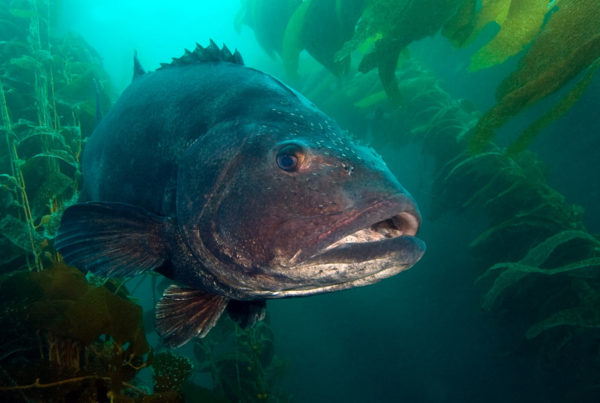
Even if not initially present, larger fish can hear your bubbles and will draw near to investigate. A group of kelp bass and rockfish may be hovering right above you when you finish taking pictures of your first fish. Stay negatively buoyant and on your knees. Point the camera straight ahead and wait for their curiosity to override their caution.

Allow your body to move like the kelp. Fish sense water movement through their lateral line. If you do not send waves their way, they will not flee. If you do not swim towards them, then they may initiate eye contact. Click, click! 

Now that fish are accustomed to the sound of bubbles you will have better luck shooting in the area immediately surrounding you. Move around a little and the larger fish may become your entourage. Search for another small subject. Sculpin have candy-striped eyes and make excellent photo subjects. Approach slowly; they will extend their dorsal fins and rise on their pectoral fins before fleeing. Do not give chase, though they may be the most interesting fish of the day. They are faster and you may scare away other potential subjects as well. 

Look for a sedentary fish that does not raise its fins upon approach. Painted greenlings are great subjects with many color variations that vary with their background. If you find one that does not raise his dorsal fin--aha!-- this is a good subject! Back up and adjust to the proper camera settings. Align yourself face to face with the fish. This will minimize your profile as you approach and allow you to fit both of the fishes' eyes in the frame. Try to get close while keeping your body lower than the camera; a smaller profile is less threatening. Move slowly and watch for any change in fin posture. Click, click, and click... You may just capture a marine life interaction that you will never forget. 


Subscribe    |    Advertise!    |    Contact CDN Staff    |    My Account
Privacy Policy    |    Terms of Use    |    Engineered by Zyphon Media, Inc.